
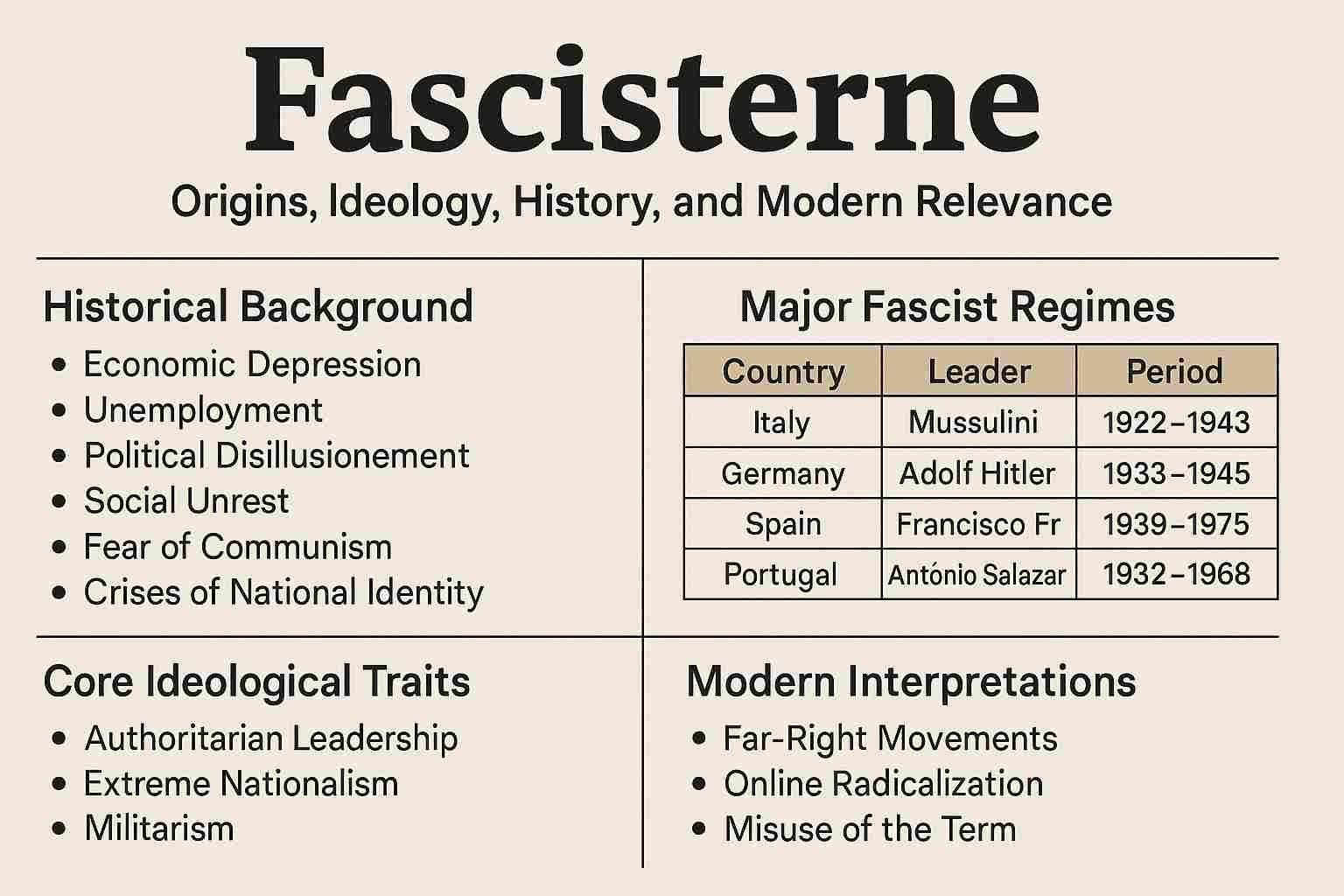
The word “fascisterne” is Danish and means “the fascists.” It is a simple word, but it represents a very serious part of world history. Fascism changed countries, caused war, and harmed millions of people. Even today, the ideas linked to fascisterne still matter because similar behaviors can appear in modern politics. This article explains fascisterne in easy English, using simple lists and tables so the information is clear and easy to follow.
What Does Fascisterne Mean?
-
Language: Danish
-
Translation: “the fascists”
-
Used for: people or groups who support fascist ideas
-
Emotional meaning: often used to describe dangerous or extreme political behavior
How Fascism Started
After World War I, many countries in Europe were struggling. Life was hard, and people felt angry, scared, and disappointed with their governments. These problems helped fascist movements grow.
Main reasons fascism became popular:
-
Strong economic problems
-
Millions of people without jobs
-
Fear of communism
-
Weak governments
-
National shame or defeat after war
-
Desire for a strong leader who could “fix everything”
These conditions made societies vulnerable to extremist ideas.
Important Fascist Regimes
Here is a clear table of the best-known fascist governments:
| Country | Leader | Time Period | Main Features |
|---|---|---|---|
| Italy | Benito Mussolini | 1922–1943 | First fascist government, strict control, nationalism |
| Germany | Adolf Hitler | 1933–1945 | Most extreme form, racism, Holocaust, total dictatorship |
| Spain | Francisco Franco | 1939–1975 | Military dictatorship, censorship, no free speech |
| Portugal | António Salazar | 1932–1968 | Authoritarian rule, police control, censorship |
These leaders and their followers are part of what we call fascisterne.
Main Ideas of Fascisterne
Even though fascist groups were different from country to country, most of them shared the same main ideas.
1. Strong, Authoritarian Leader
-
One leader makes almost all decisions
-
People must obey without question
-
Leader is often treated like a hero or savior
2. Extreme Nationalism
-
The nation is seen as more important than anything else
-
Minorities or outsiders are often blamed for problems
-
National pride is used to control people
3. Love of Violence and Militarism
-
Violence is seen as a tool to solve problems
-
War is described as “glorious” or necessary
-
Paramilitary groups often exist to scare or harm opponents
4. Anti-Democracy
-
No real elections
-
No opposition parties
-
Little or no free speech
-
Courts, schools, and media are controlled by the state
5. Propaganda and Information Control
-
Government controls newspapers, radio, films, and books
-
Only one opinion is allowed
-
People are taught to trust the state and hate its enemies
Simple Table: Key Elements of Fascism
| Element | What It Means | Why Fascists Use It |
|---|---|---|
| Authoritarian rule | One strong leader controls everything | Prevents disagreement |
| Nationalism | “Our nation above all” | Makes people feel united and loyal |
| Militarism | Use of force and violence | Keeps the population afraid and obedient |
| Anti-democracy | No voting or open debate | Stops anyone from taking power |
| Propaganda | Controlled information | Shapes what people think and believe |
Fascisterne in Denmark
Denmark did not have a large fascist movement, but fascism still affected the country during World War II, when Nazi Germany occupied Denmark from 1940 to 1945.
In Denmark at that time:
-
Some small groups supported the Nazis
-
Some Danes helped the German occupiers
-
Many more Danes joined resistance groups
-
Resistance fighters printed secret newspapers, helped Jewish people escape, and sabotaged German operations
Today, the word fascisterne is used in Denmark when talking about:
-
The history of WWII
-
School lessons about Nazism
-
Films and books about the occupation
-
Discussions about democracy and freedom
Table: Fascism vs. Danish Democracy
| Topic | Fascisterne (Fascism) | Danish Democracy |
|---|---|---|
| Leadership | One dictator | Leaders elected by citizens |
| Rights | Very limited rights | Human rights protected |
| Press | Censored and controlled | Free, independent press |
| Minorities | Blamed or oppressed | Protected and equal under law |
| Power | Taken by force | Shared and limited by law |
Impact of Fascisterne on the World
The actions of fascist leaders had enormous consequences for the entire world.
Major Effects:
-
World War II: the deadliest conflict in history
-
Holocaust: six million Jews and millions of others murdered
-
Huge destruction across Europe
-
New international laws created after the war
-
The United Nations formed to prevent future conflict
Long-term influence:
-
Stronger democratic systems
-
Laws to protect human rights
-
More warnings against dictatorships
-
Better understanding of how propaganda works
Fascism changed the world forever, and its lessons are still important.
Modern Meaning: Why Fascisterne Still Matter Today
Even though the original fascist governments ended in 1945, many people still use the word fascisterne today. This is because some ideas or behaviors from fascism can appear again in new forms.
1. Growth of Far-Right Groups
Some modern groups show similar traits, including:
-
extreme nationalism
-
dislike of minorities
-
strong leader worship
-
aggressive political language
-
attempts to limit media freedom
2. Online Radicalization
The internet makes it easier for extremist ideas to spread.
Common online tools used by extremists:
-
social media posts
-
online propaganda videos
-
anonymous chat rooms
-
conspiracy theories shared on forums
3. Misuse of the Word “Fascist”
Sometimes people call someone a “fascist” simply because they disagree with them. This weakens the meaning of the term and makes it harder to identify real authoritarian danger.
Warning Signs of Authoritarian Behavior
Studying fascisterne helps us notice early signs of rising authoritarianism.
Common Warning Signs:
-
Attacking or controlling the media
-
Blaming minorities for national problems
-
Weakening or ignoring the courts
-
Reducing free speech
-
Encouraging political violence
-
Claiming only one leader can “save the country”
-
Limiting or manipulating elections
Table: Early Signs Compared to Fascist History
| Warning Sign | Simple Explanation | Seen in Historical Fascism? |
|---|---|---|
| Media attacks | Calling journalists “enemies” | Yes, very common |
| Minority blame | Saying outsiders are the problem | Yes, used heavily |
| Power grab | Reducing checks and balances | Yes, used to build dictatorships |
| Control of speech | Punishing critics | Yes, through censorship |
| Leader worship | Treating leader as perfect | Yes, used by Mussolini & Hitler |
What We Can Learn From Fascisterne
The history of fascisterne teaches us several important lessons.
Key Lessons:
-
Democracy is fragile and needs protection.
-
Education helps people recognize propaganda and lies.
-
Diversity makes societies stronger, not weaker.
-
Free press and open debate are essential for freedom.
-
History can repeat itself if people are not aware of the warning signs.
Conclusion
Fascisterne refers to fascists of the past, but the ideas behind the term are still important today. By understanding where fascism came from, how it worked, and what it caused, we can better protect our societies from similar dangers.
The story of fascisterne reminds us that freedom, democracy, and human rights cannot be taken for granted. They survive only when people stay informed, speak up, and defend these values.